Climate Resilience: Lessons From the Dutch Code Red Heatwave
On June 26, 2026, an unprecedented public health landscape unfolded across the Netherlands. For the first time in Dutch history, the Royal Netherlands Meteorological Institute (KNMI) issued a Code Red extreme heat warning as temperatures soared toward 40°C. While municipal and national crisis channels advised residents to stay indoors, real-time observations on the street revealed an important paradox: many citizens—particularly vulnerable families and the elderly—flooded into urban spaces because their homes had become severe, unventilated heat traps.
CLIMATE ACTIONSUSTAINBLE FUTURE
MY NAME IS CLIMATE
6/26/20263 min read
🔍 Key Field Findings: Public Awareness for Every Citizen
The observations on the ground exposed deep, systemic gaps in how modern cities and social structures handle extreme thermal stress. These insights are vital for public awareness everywhere:
🏠 The Indoor Heat Trap: Staying indoors isn't automatically safer for everyone. When asked why she was outdoors during a red alert, a local resident revealed: "My house has no fan, no ventilation, and the way my apartment building is structurally designed, it traps and holds significantly more heat inside than what is being experienced outdoors."
🚰 Reliability of Public Infrastructure: The Grote Markt features a beautiful water fountain designed to serve as a critical cooling mechanism. On the day of the heatwave, this asset was completely out of order. This left an expansive, concrete-dominated square devoid of public water at a time when local surfaces were severely overheated.
🤝 Overcoming Social Barriers to Care: The initiative exposed a distinct cultural hurdle regarding public assistance. When an elderly woman in respiratory distress sat near the stall and was brought water, she expressed absolute disbelief, asking: "Nothing is free in Holland. Why are you doing this? Is the municipality paying for this?"
❤️ The Role of Mutual Aid: Bhusal clarified that the operation was completely self-funded and executed out of a deep human obligation to look out for one another. This act of community care deeply affected onlookers, inspiring conversations about mobilising local youth for mutual-aid networks and echoing compassionate values found across global traditions.
🏛️ Institutional Recommendations for Almere Municipality
As an EU Climate Pact Ambassador, Lalit Bhusal highlights that local municipalities can no longer treat extreme heat waves as temporary anomalies. With rapid urban population growth and expanding concrete footprints, immediate structural adjustments are necessary.
The My Name Is Climate Foundation officially calls upon the Almere city council to implement these five safeguards before next summer:
Continuous Public Water Accessibility: Ensure all public fountains are strictly maintained and operational. Temporary emergency drinking stations must be deployed the moment a heat warning is issued.
Active Field Welfare Operations: Deploy active mobile patrols—including community health units, police, and specialized climate responsibility officers—to monitor public squares and directly distribute aid to vulnerable individuals.
Urban Greenery & Rapid Canopies: Accelerate the planting of native giant trees and install artificial shading systems across major public squares. The current concrete-to-shade ratio at Grote Markt is insufficient for high temperatures.
Air-Conditioned Public Refuges: Designate clear, air-conditioned public cool zones. Apart from the local library, the town center lacks accessible, climate-controlled sanctuaries for residents who cannot cool their own homes.
Inclusive Decentralized Alert Systems: Traditional digital warnings leave vulnerable sectors behind. The city must adopt localized, physical, and multi-lingual signaling to reach non-native speakers and the elderly who miss digital bulletins.
🌐 Support and Follow the Initiative
The My Name Is Climate Foundation will continue to bridge the gap between policy making and real-world humanitarian execution.
Official Website: www.mynameisclimate.com
Instagram Community: @mynameisclimate
🎬 A Note on Creative Advocacy: Beyond direct field advocacy, Lalit Bhusal utilizes the medium of cinema to push climate storytelling into international spheres. Community members, municipal leaders, and ecological advocates are warmly invited to connect with his creative work at next year's Almere International Film Festival—a major cultural initiative he proudly founded to bring community and global awareness together.
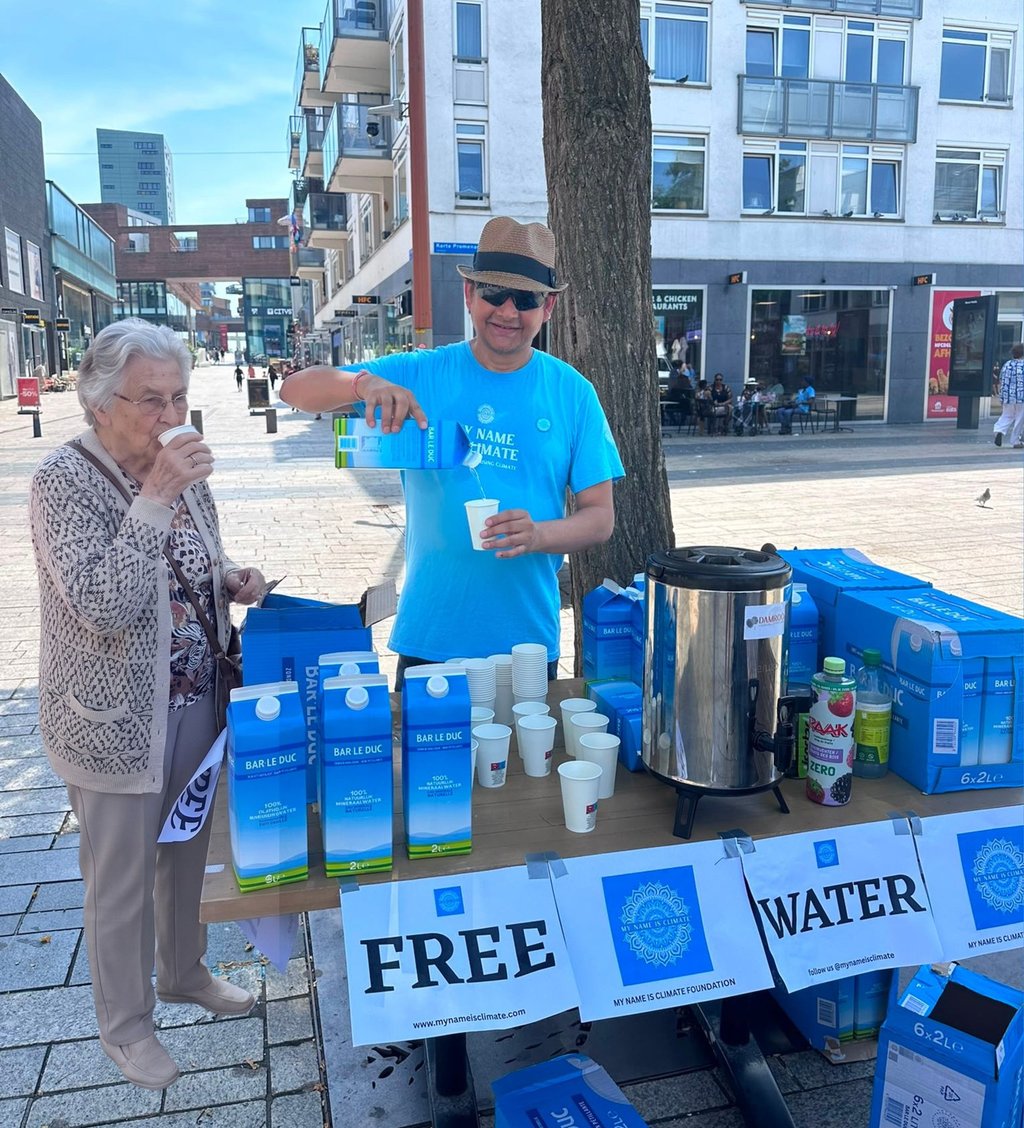
In response, Lalit Bhusal—founder of the My Name Is Climate Foundation, filmmaker, and official European Union Climate Pact Ambassador—deployed an immediate 24-hour rapid response hydration action at the Grote Markt in Almere Centre. The findings from this field action offer critical insights and awareness for urban communities everywhere navigating a warming world.
💡 The Changing Climate Landscape in the Netherlands
Accelerated Warming: Long-term data from the KNMI reveals that temperatures in the Netherlands are climbing twice as fast as the global average rate of warming (increasing by 0.4°C every decade since 1991).
A Frequency Shift: The frequency, duration, and intensity of Dutch heatwaves have spiked sharply. Half of all recorded heatwaves in history have occurred just within the last 25 years.
New Design Realities: This historic June 2026 Code Red activation highlights a permanent shift into new thermal territory for a country historically built and architected for cooler, maritime weather conditions.
⏱️ Field Timeline & Who Was Affected
The hydration relief operation was organized within a single evening and launched the following afternoon to directly interface with peak midday thermal accumulation in the city center.
12:00 PM – 1:00 PM: Initial foot traffic across the square appeared visually stable. However, a surprising number of young children, multi-generational families, and elderly citizens were navigating the unshaded public square.
1:00 PM Onwards: Environmental conditions changed rapidly. Thermal radiation reflecting off concrete surfaces created a heavy environment. Passersby began exhibiting visible signs of physical heat distress, with multiple individuals struggling in the stagnant air.
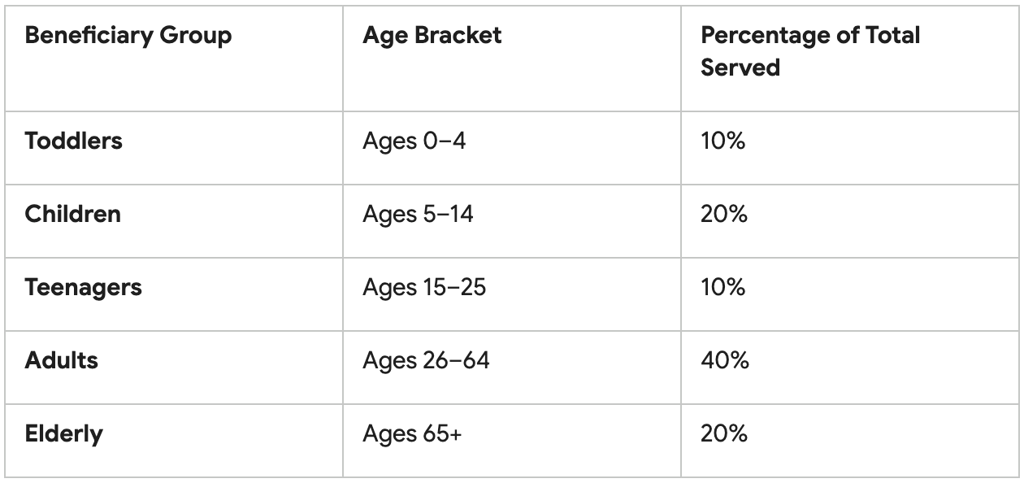
The Action: By the end of the day, the foundation provided free water, glassware, mixed lemonades, and rehydration powders to an approximate total of 650 to 700 people.
📊 Demographic Breakdown of Served Community Members